By Dalia Guzman-Perez
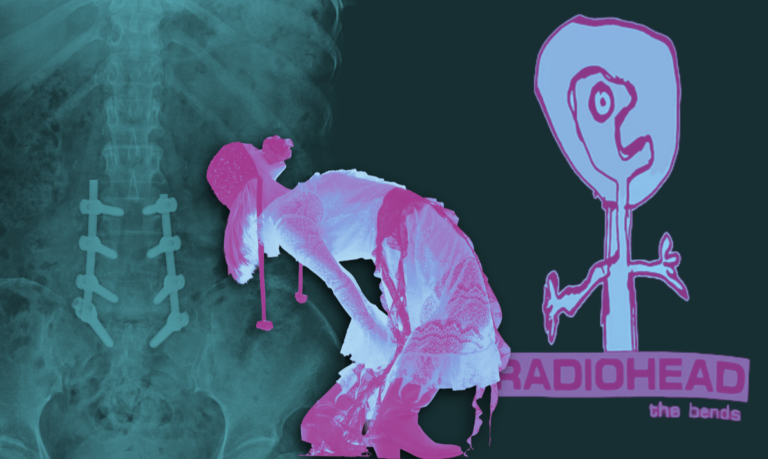
Today marks thirty-one years of decompression sickness. The album’s title isn’t metaphorical decoration; it’s diagnostic. Decompression sickness, the bends, happens when you ascend too quickly from depth, when dissolved gases in your blood expand faster than your body can process them. Nitrogen bubbles form in joints and tissues, in the brain, in the heart. The pain is your body rejecting the transition, refusing the violence of moving between pressures too fast. This is what The Bends understands about existing in 1995, or 2026, or any moment when the gap between what you’re supposed to feel and what you actually feel becomes physiologically untenable. The album documents what happens when you try to surface into normalcy from the depths of genuine feeling; when you attempt to be functional in a world that requires emotional compression, when the air up here is too thin for the kind of breathing you need to do. There’s a specific mathematics to longing that The Bends understands; not the clean-cut geometry of desire fulfilled, but the irregular angles of wanting something you can’t quite name. This is an album built like a blueprint for feeling too much in spaces designed for feeling nothing at all. Thom Yorke’s voice operates in that frequency where vulnerability stops being weakness and becomes a precision instrument in its own right. When he sings, he’s not performing pain; he’s documenting it with the exactitude of someone who knows that the only way through certain feelings is to map every contour. The Bends doesn’t argue for authenticity; it simply sits in the exhaustion of performing yourself until you forget which version was real.
Every song here is another symptom of the same atmospheric sickness. Planet Telex is the initial disorientation, the moment you realize the pressure has changed and you can’t quite orient yourself. The Bends (the song) makes the diagnosis explicit; this tightness in your chest, this inability to adjust, this is what happens when the world asks you to be happy in conditions designed for suffocation. My Iron Lung extends the medical metaphor: the machinery keeping you alive that you’ve come to hate, the apparatus of survival that feels like its own form of death. But the genius is how the title works both ways. The bends happen when you rise too fast, but also when you descend too quickly, when you drop into depths your body wasn’t prepared for. The album holds both movements: the pain of trying to live normally when you’re drowning in feeling, and the agony of plunging into emotional depths the surface world has no vocabulary for. Fake Plastic Trees is about trying to function at sea level when you know you’re built for different pressures entirely. Street Spirit is about the descent with no plan for resurfacing.
The production has this quality of being both expansive and claustrophobic; guitars that shimmer and then crush, dynamics that breathe. It’s the sound of 1995 trying to figure out what comes after grunge’s self-destruction, landing somewhere between arena ambition and bedroom isolation. The band hasn’t yet disappeared into OK Computer’s cerebral architecture; they’re still interested in the body’s response to emotional extremity, in sweat and velocity and the physical fact of feeling. They’re still documenting what it feels like in your joints, your lungs, your blood; the somatic reality of pressure sickness.
What strikes me is the album’s refusal of resolution. These aren’t songs that solve anything. Street Spirit ends the record not with catharsis but with a kind of tender fatalism, “immerse your soul in love,” as if the only response to inevitable fade is to feel more intensely while you can. It’s pragmatist philosophy set to distortion: we can’t escape impermanence, so we might as well build cathedrals in the temporary. The consciousness processing here isn’t about answers. It’s about having the courage to ask better questions about what it means to be awake in a world designed to numb you. The Bends is the sound of refusing easy comfort, of choosing to feel the full weight of existence even when, especially when, it hurts. There’s no cure offered here, no decompression chamber that will safely regulate your return to the surface. Just the acknowledgment that some of us are built for different atmospheric conditions than the ones we’re expected to survive in, and the transition will always hurt, and maybe the pain is the price of refusing to acclimate to a world that asks us to feel less.
Planet Telex
The album opens with disorientation as a method. Those warped, swimming guitars; it’s the sonic equivalent of waking up in a place you don’t recognize, where the familiar has been subtly rearranged. The song begins with that keyboard line, pitched down, distorted, almost nauseous in its wobble, before the drums kick in with a rhythm that feels both propulsive and unsteady. Ed O’Brien’s guitar work here is less about melody and more about texture, creating atmospheres that ripple and bend. The production choices mirror the lyrical ambiguity: everything sounds slightly off-center, like listening to a familiar song through water.
“You can crush it, but it’s always here,” Yorke sings, and there’s something about that line that captures the persistence of certain emotional states, the way the feeling of fear or of impending doom doesn’t disappear just because you will it to.
The brilliance is in what the song refuses to specify; Yorke never names the “it” that haunts the lyrics, the thing you can crush but that’s always here, the thing you can taste but that will not form. This isn’t vagueness; it’s precision of a different kind. By leaving the threat unnamed, the song becomes a container for whatever inevitability you’re trying to hold at bay, whatever knowledge sits heavy in your peripheral vision refusing to come into focus. There’s something about communication breakdown embedded in the title itself; telex, that obsolete telecommunications service, suggesting information that’s garbled in transmission, messages that arrive distorted or incomplete. The thing that won’t form, that stays perpetually on the tip of your tongue; it’s the knowledge you can’t quite articulate but can’t stop trying to speak.
The song moves like someone trying to find their footing on unstable ground, synthesizers creating a landscape that shifts beneath you. When the guitars finally cohere into something like a riff around the two-minute mark, it’s less resolution and more temporary stabilization; you get your bearings just long enough to realize how precarious they are. The song doesn’t explain itself because the feeling it’s documenting exists precisely in that space before language, where dread operates below the threshold of naming.
High and Dry
This is the one that feels like a photograph of someone walking away. Acoustic, almost too pretty, which makes the cruelty sharper. The song is deceptively simple; just clean guitar arpeggios, that steady drum pattern, Jonny Greenwood’s electric guitar adding texture in the margins without ever dominating. It’s the kind of arrangement that could soundtrack a coffee shop, which is perhaps why Yorke came to hate it, calling it “very bad” years later, admitting he’d been pressured into including it on the album. There’s something about its accessibility that feels like a betrayal of the album’s more complex emotional architecture, though maybe that’s unfair. Sometimes the simplest structures hold the heaviest weight. The title pulls from naval terminology; a ship left high and dry on shore, stranded where water used to be, unable to move. It’s about abandonment rendered as geography, the ground shifting beneath you until you’re stuck somewhere you were never meant to survive. The plea itself operates on multiple frequencies: the literal departure of someone who used to anchor you, the frustration of helplessness when your blanket of solace walks away, maybe even the desperation of dependency in its more chemical sense; being left without access to what you’ve come to need.
“Don’t leave me high, don’t leave me dry” is the kind of plea that knows it’s already too late, that the asking itself is the answer. There’s a specific loneliness to being the one who cares more, to watching someone’s indifference calcify into something permanent. The song doesn’t dramatize this; it just presents it with the flat affect of someone who’s run out of ways to make the other person stay. That second verse; the wealth and fame turning hollow without genuine connection to spend it with—suggests the particular isolation of having everything except what actually matters.
The instrumental break lets the guitar breathe, those notes hanging in space like questions no one’s going to answer. It’s understated in a way that almost makes it worse, the refusal of cathartic crescendo. The song just continues at the same emotional register, which is its own kind of devastation: not the dramatic rupture but the quiet recognition that you’ve already been left behind.
Fake Plastic Trees
If I had to choose the song that most understands the exhaustion of performance, it would be this one. Not performance as theater, but as the daily work of being a person in late capitalism, where even your interiority feels mass-produced. Yorke has said the song came from “a joke that wasn’t really a joke, a very lonely, drunken evening and, well, a breakdown of sorts. “He had a melody with no idea what to do with it, so instead of his usual method, cataloging what his head was singing, forcing clever phrases onto the structure, he just recorded whatever was happening in real time. The result was something he initially found funny, especially the polystyrene bit, which is interesting because there’s nothing funny about how the song lands now. What starts as absurdist observation curdles into something much darker in the telling.
The arrangement builds with painful slowness; that picked acoustic guitar, the bass entering like a heartbeat, and then those strings that don’t arrive until halfway through, swelling with a beauty that makes the hollowness more devastating. It’s Jeff Buckley-adjacent in its dynamics, the way it uses delicacy as a weapon. “She looks like the real thing / She tastes like the real thing / My fake plastic love;” the repetition of “real thing” until it stops meaning anything is the point. The strings don’t elevate the song; they make it more devastating, beauty applied to something fundamentally hollow.
There’s a particular genius in how the song moves from observing fakeness in others, the woman with the fake plastic love bought from a rubber man, to the collapse of that observational distance. By the final verse, the narrator is the one who wears out, who gravitates to somewhere greener, who desperately wants to be different in a world that only manufactures sameness. By the end, when Yorke’s voice cracks on “if I could be who you wanted all the time,” it’s not cathartic. It’s the sound of someone realizing they’ve been trying to be authentic in a world that only has vocabulary for replicas.
What began as drunken stream-of-consciousness becomes diagnosis: this is what breakdown sounds like when you’re too exhausted to perform even for yourself, when the joke stops being funny because you realize you’re part of the punchline.
Bones
There’s a visceral quality here that the album mostly avoids; this is sweat and motion, the body insisting on itself. The guitars slash with an urgency that borders on panic, Colin Greenwood’s bassline driving forward like something’s chasing it. Phil Selway’s drums hit harder here than almost anywhere else on the record, the whole arrangement operating at a tempo that feels like flight response made audible. The song pulses with mortality anxiety, with the awareness that bodies are temporary, that the machinery breaks down. The imagery of being “crippled and cracked” isn’t metaphorical; it’s about the physical reality of aging, the skeleton giving out beneath you. The song captures something primal about embodiment: not just desire but the terror of being housed in something that’s already failing, where everything vital and urgent is just preface to the body’s ultimate failure.
The Prozac reference sits strange in the middle of all this; that prescription meant to regulate everything from depression to panic to obsessive thought patterns. It’s either pharmaceutical escape from the terror of embodiment or just another substance the body processes, another chemical intervention that can’t stop the fundamental fact of decay. The ambiguity matters: is this about numbing the fear or just acknowledging that we’ll try anything to make the waiting more bearable?
It’s interesting how the song manages to be both aggressive and fragile, guitars that slash but a vocal delivery that sounds perpetually on the edge of breaking. The repetition of “I used to fly like Peter Pan” becomes less whimsical each time, more like someone cataloging what they’ve lost access to. Not just youth but the feeling of invincibility that comes before you understand what bones actually do; how they carry you until they don’t, how they’ll be ground to dust and ash, how aging is just the preview of the final disappearance. The song doesn’t resolve this; it just runs at full speed like maybe velocity itself is the answer, like if you move fast enough you might outrun your own mortality.
(Nice Dream)
The title is ironic in that particular British way; this is a nice dream in the way a comfortable lie is nice, in the way denial feels better than facing what’s actually happening. The song floats, almost narcotic, built on acoustic guitar that shimmers like heat distortion. There’s a gentleness to the instrumentation; brushed drums, ambient keyboard textures; that makes the underlying devastation sharper by contrast. Yorke sings “they love me like I was a brother” and then immediately undercuts it: “nice dream.” The conditional love he’s been imagining doesn’t exist outside his own construction of it. The portable telephone functioning as an answering machine; the technology of connection repurposed for avoidance; captures something about modern intimacy, how we engineer elaborate systems for being unreachable. The sarcasm in that imagery is quiet but cutting: all this capability for communication and still the persistent experience of being unable to reach the person you need.
Yorke has said the song references a Kurt Vonnegut story about a crystal that turns all water solid; drop it in the ocean and everything freezes. If you want to kill yourself, you just put your finger in. It’s an apocalypse presented as suicide method, the ease of ending everything rendered almost casual. That’s the energy here: not violent self-destruction but the gentle fantasy of dissolution, the dream where checking out is as simple as touching water. The music suggests he doesn’t quite believe in the love he’s describing, but there’s something about the gap between the gentle arrangement and the underlying void that makes this one linger.
It’s the feeling of knowing you’re only temporarily safe, that the dream state can’t hold. The song doesn’t build to catharsis; it just drifts, suspended in that space between wanting to believe and knowing better. Eventually you have to wake up, and the world will still be solid, and the person still won’t answer, and the love was only ever something you told yourself to make the waking bearable.
Just
The most overtly aggressive moment on the record, and even here, there’s something cerebral about the anger. That guitar riff (written by Jonny Greenwood on a freezing cold farm in 1994, trying to cram as many chords as possible into a single song) is mathematical in its precision, each note placed exactly where it needs to have maximum impact. The influence is Magazine’s “Shot by Both Sides,” John McGeoch’s angular playing translated into Greenwood’s own jagged vocabulary. It’s the same kind of idea: guitar as architecture rather than melody, building something that corners you.
The riff doesn’t relent. It keeps cycling back, insistent, almost obsessive in its repetition. The rhythm section locks in with the kind of tightness that makes the whole thing feel like machinery, like something industrial repurposed for emotional violence. When the distortion kicks in fully, it’s not cathartic release; it’s escalation, the song doubling down on its own intensity.
“You do it to yourself, you do, and that’s what really hurts” might be the most devastating lyric on an album full of them; the recognition that you’re complicit in your own suffering, that the call isn’t coming from outside the house. The way Yorke delivers it, not with resignation but with something closer to fury, transforms self-awareness into its own kind of weapon. Knowing you’re doing it to yourself doesn’t make you stop; it just adds another layer of damage, the anger at your own participation in your destruction. The video’s famous ending (the man lying on the pavement refusing to explain why) is perfect: some knowledge is too terrible to share, some explanations would only multiply the damage. The song operateson the same principle; it doesn’t tell you how to stop doing it to yourself because maybe there is no answer, maybe the only honest response is this relentless angular riff that won’t give you anywhere to rest. The guitar just keeps coming, all those chords Greenwood managed to fit in, each one a different articulation of the same trapped feeling.
My Iron Lung
A song about the machinery keeping you alive that you’ve come to resent. The iron lung here is “Creep,” the one hit that keeps them commercially viable, the apparatus they need but hate needing. The quiet-loud dynamics don’t feel borrowed; they feel organic to the song’s central metaphor, like respiratory rhythm, the iron lung expanding and contracting, forcing air into lungs that would rather breathe on their own. The song opens with clean guitar that could almost be gentle before the distortion crashes in like life support failing and restarting.
“This is our new song, just like the last one” makes the self-awareness explicit. They know they’re not as successful as their sales suggest; it’s all smoke and mirrors propped up by that one massive single. The “headshrinkers” aren’t therapists; they’re the producers circling like vultures, wanting their cut of the phenomenon, the industry apparatus that profits from keeping you dependent on the thing that’s suffocating you. There’s a particular kind of anger in being saved by something you hate, in needing the very thing that reduces you.
“My uncle Bill” plays on money bills, the way currency becomes personified when you’re trapped in its logic, when it stops being tool and starts feeling like identity, like family you can’t escape. The Belisha Beacon reference, those orange flashing lights that guide pedestrians in Britain, suggests something about being reduced to signage, to a marker that tells people where to walk but has no agency of its own. You become the thing that points the way without being able to choose your own direction.
The instrumental sections let the guitars do violence to each other, Greenwood’s leads cutting through the rhythm work like something trying to break free of its own structure. When Yorke screams “the headshrinkers, they want everything,” it’s not metaphorical. It’s the rage of being apparatus, of being the mechanism that keeps an industry breathing while your own lungs collapse. The song doesn’t offer escape from this dependency; it just documents what it feels like to need something that’s killing you, to be kept alive by the very thing making you wish you weren’t.
Bullet Proof..I Wish I Was
The ellipsis in the title does more work than it should. This is longing for invulnerability presented as fantasy rather than a goal, the conditional tense of “I wish” doing all the emotional labor. The song moves slowly, almost stoned, paranoia set to a shuffle beat. The tempo drags like exhaustion, guitars that shimmer without ever resolving into anything solid. There’s a haziness to the production; everything slightly blurred at the edges, Phil Selway’s drums keeping time but never quite anchoring you. “Bring down the government, they don’t speak for us” sounds less like a political manifesto and more like the conspiracy theories you develop when you can’t make sense of your own powerlessness. It’s the logic of someone so depleted that systemic overthrow feels more achievable than personal change. The desire to be bulletproof is really the desire to stop feeling so much, to have armor against a world that won’t stop wounding you. Not strength but numbness, not protection but the fantasy of being unreachable.
The way Yorke’s voice floats through the mix, detached, almost dissociative, suggests someone already halfway to the invulnerability they’re wishing for. The guitars wash over each other in waves, creating texture without ever building to anything. It’s a song that refuses climax, that just continues in its own stupor. The ellipsis isn’t pause for thought; it’s the gap between what you want and what’s possible, the space where the wish dies before you even finish articulating it.
There’s something about the looseness of the arrangement that makes the song feel like it’s coming apart even as it plays, like the wish for impermeability is itself dissolving in real time. You can’t be bulletproof. The best you can hope for is this kind of narcotic drift, where the hits still land but you’re too far gone to register the impact.
Black Star
This is my favorite track from the album, and I need to say that upfront because there’s something about this song that doesn’t just move me; it hurts me, extremely, but in a way that reminds me I have feelings at all.
There’s something almost gothic here, the way the song builds its dread incrementally. The opening is deceptively gentle, acoustic guitar, minimal percussion, before the electric guitars start layering in, each one adding weight until you’re carrying something you can’t put down. “Blame it on the black star / Blame it on the falling sky” locates responsibility anywhere but in human agency, which is either cosmic wisdom or profound evasion, maybe both. The black star itself is scapegoat; something so rare you’d almost never see one, which makes it perfect for projection. It’s a non-existent, non-tangible object, an easy target for blame when the real sources of pain are too close, too complicated, too implicating.
The “satellite” and “beam” imagery could be celestial, the moon, natural orbit, or man-made telecommunications infrastructure, signals crossing vast distances but never quite connecting. Either way, it’s about remoteness, about things that circle each other without touching, about transmission that gets lost in space.
The bridge, “I get home from work, and you’re still standing in your dressing gown, ” is so specific in its domestic depression that it cuts deeper than any of the celestial imagery. This is what stagnation looks like up close, the failure to move rendered in the small details of daily life. Someone you love stuck in place, and your helplessness to unstick them, and the slow recognition that you might be heading toward the same paralysis.
“Cruel, this is killing me” by the end, he’s arrived at the impossible position, damned regardless of choice. The struggles with love, trying to help someone you love, losing them anyway, watching yourself drift toward the same mental precipice they’re on; it takes a toll that’s more than metaphorical. It’s killing his spirit. The song understands that some emotional experiences rival death itself not in their drama but in their capacity to hollow you out from the inside.
The way the guitars swell in the final section, that ascending progression that never quite resolves; it’s beautiful and unbearable in equal measure. This song dampens me. It sits heavy in a way that few songs manage, and I think that’s because it refuses to offer distance from the pain. It just lets you sit in it, lets you feel the full weight of being crushed by something you can’t even name properly, something as elusive and blame-worthy as a black star.
Sulk
The album’s most underrated track, probably because it’s genuinely difficult to listen to. Written about the Hungerford massacre, when Michael Ryan killed sixteen people before taking his own life in 1987, it takes on the impossible task of processing senseless violence without explanatory comfort. The song doesn’t try to make sense of what happened because there is no sense to be made, no narrative arc that would contain this kind of horror.
The instrumentation matches the subject matter’s jaggedness. The guitars are sharp, angular, refusing to settle into anything remotely comforting. There’s a tension in the rhythm that never releases, drums that push forward without ever reaching resolution. Yorke’s vocal delivery has this quality of barely controlled rage mixed with something closer to nausea, the voice of someone forced to witness what shouldn’t be witnessed.
“You bite through the big wall, the big wall bites back” doesn’t resolve anything, doesn’t offer meaning where none exists. It’s just the mechanical fact of violence and consequence, action and reaction stripped of moral framework. The imagery throughout stays abstract enough to avoid exploitation; this isn’t about gore or spectacle but about the psychic weight of knowing such things happen, of living in a world where they’re possible.
The guitar work is jagged, uncomfortable, refusing the listener any place to rest. When the song builds to its climax, it’s not cathartic; it’s just louder devastation, the same unresolved anguish at higher volume. Sometimes the only honest response to horror is this kind of formal discomfort, the refusal to make it palatable or to extract meaning where meaning would be obscene.
The song sits on the album like a wound that won’t close, the track you might skip not because it’s bad but because some days you don’t have the capacity to hold that much darkness. And maybe that’s the point; some things should be difficult to face, some grief shouldn’t be easy to consume.
Street Spirit (Fade Out)
And here we arrive at the end, which isn’t really an ending so much as an acknowledgment that some things don’t resolve. The guitar arpeggio that opens the song, picked with metronomic precision, descending in minor key, establishes immediately that we’re not heading toward light. This is one of those rare pieces of music where every element conspires toward the same emotional truth: the bass following the guitar’s descent, the drums entering with restraint that feels like grief, Greenwood’s ambient textures hovering like something waiting to claim you.
“Immerse your soul in love” sounds like instruction, but the music suggests it’s more like prayer; something you say into the void hoping it might take shape. The repetition of the phrase doesn’t make it more convincing; it makes it more desperate, like someone trying to believe their own advice. The song is relentless in its minor-key descent, beautiful in the way that watching something break in slow motion can be beautiful.
Yorke has said this is the darkest song he’s ever written, and you can hear why: it’s not violent darkness but the quiet kind, the recognition that fade is inevitable and the only choice is how you meet it. There’s no anger here, no fight left; just this steady progression toward dissolution. The way the song builds isn’t toward climax but toward a kind of terrible acceptance, each repetition of “immerse your soul in love” feeling less like hope and more like the thing you tell yourself when there’s nothing left to hold onto. The production is sparse in a way that makes every element count. When the strings finally enter, they don’t rescue the song from its darkness; they make it more ceremonial, like bearing witness to something you can’t prevent. The guitar continues its descent throughout, never wavering, never offering respite. Bythe time the song fades out (the parenthetical in the title doing exactly what it promises), you understand that this isn’t pessimism; it’s radical honesty about impermanence.
The song doesn’t offer catharsis. It offers witness. And maybe that’s the most generous thing art can do; sit with you in the dark and confirm that yes, it really is this heavy, and no, you’re not wrong to feel crushed by it. “Immerse your soul in love” becomes less directive and more like documentation of the only response that makes sense when everything else has failed, not because love fixes anything, but because what else are you supposed to do with the time you have before the fade?