
By Michael Frere
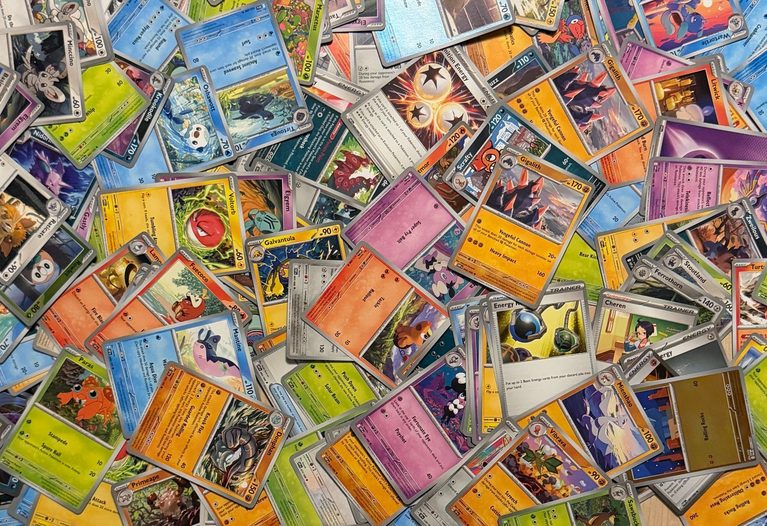
I grew up addicted to Pokémon. Every day, I would come home from school and spend hours invested into this world of magical creatures. I always begged my uncle to buy me the new packs at GameStop. I spent hours watching YouTube videos of people playing the games, discussing lore, and even creating their own Pokémon–shoutout to Trugreen7, you were my childhood.
That addiction carried all the way through middle and high school. Even if I wasn’t trading and incorrectly playing the card game at lunch, I’ve always had a soft spot for this franchise. I mean, my heart still melts when I see Pokémon like Larvitar. There’s just something so special about Pokémon that’s kept me, and millions of others, entertained since childhood.
That isn’t to say the way I love the series has stayed the same. When I was a kid, seeing cool creatures battle it out with fire beams was the best thing ever. Now that I’m older, my connection has gotten much deeper.
Pokémon bonds me with the people around me in a different kind of way. For example, my girlfriend and I ripping packs and spending hours looking for cards is one of the best things ever. Some people I’ve mentioned think it’s silly, but to me it’s no different than watching football with my roommates. Pokemon is a special kind of medium that brings people together in a way nothing else can.
That’s because, at its core, Pokémon has always sought to bring people together. In the TV show, the main character, Ash Ketchum, always travels in a group of people, meeting other trainers and building connections all around the world. The video games push players to trade their Pokémon and battle friends. The trading card game (TCG) is all about trading with others and building decks to battle. All these things push fans to find other fans; to build real world relationships that all start from a love of Pokémon. Where many fans today make these real world connections are events just for Pokémon.
Unbeknownst to many, Washington, D.C. hosts one of the most active and hardcore Pokémon scenes in the United States. D.C. has produced multiple world-champion-caliber players, such as Wolfe Glick, Justin Tang, and Justin Newdorf. The Pokémon community in D.C. focuses heavily on these competitive events, with hundreds of local events happening every month. One place that hosts these events is Pure Panic Comic & Games, a local comic and card shop that opened up in Silver Spring about a year and a half ago.
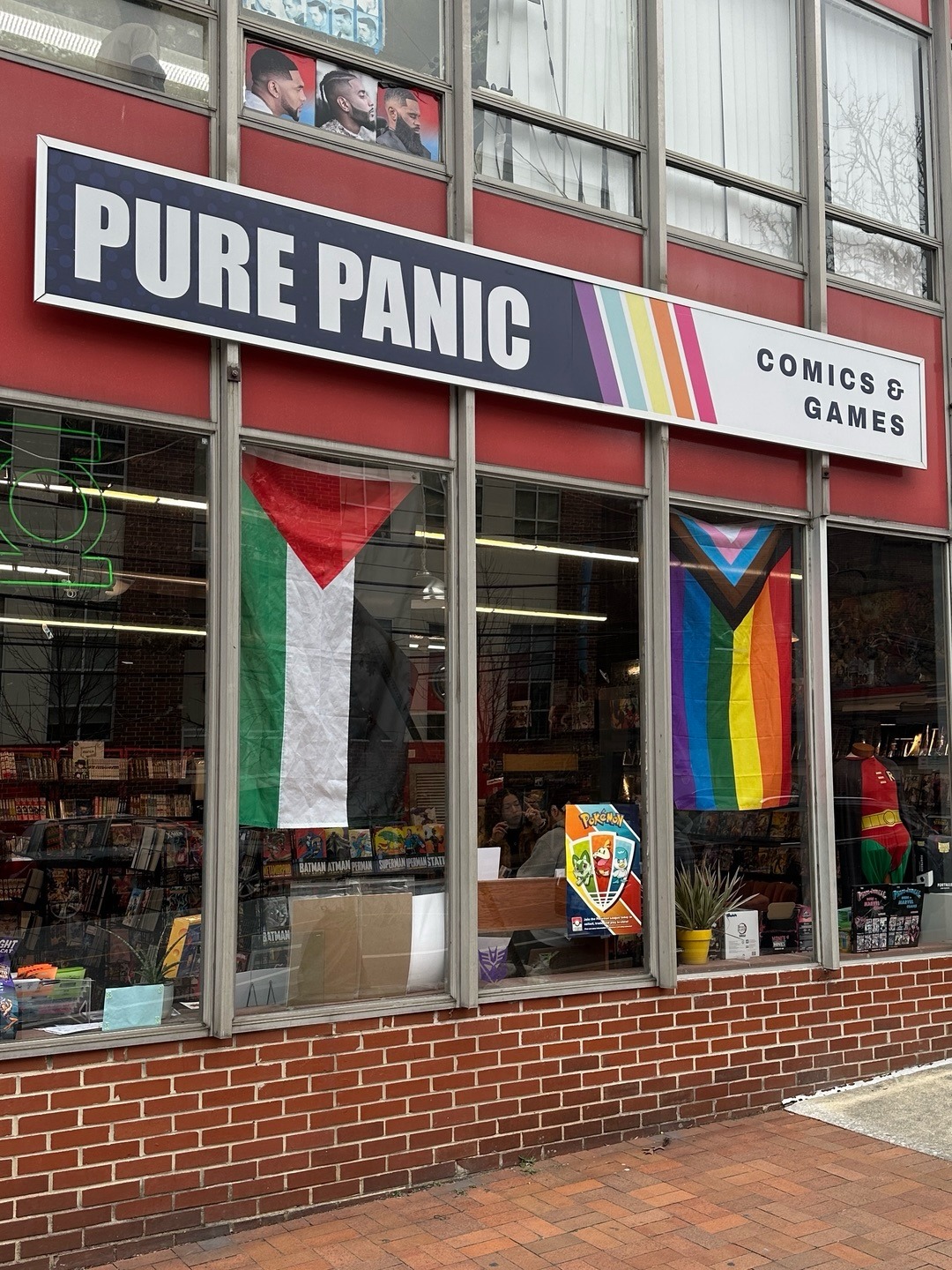
Pure Panic sits in the heart of Silver Spring, surrounded by various different Ethiopian restaurants and small businesses. Half of the store’s walls are purely windows, creating a cheery atmosphere even from the outside. The smell of printer ink and cardboard hits like a wave as the door opens. The walls that aren’t windows are filled floor to ceiling with graphic novels and comic books. The store is crammed with shelves of local and alternative comics popping up where there’s free space, the only breaks coming from the three small tables that are set up inside the shop. The store didn’t feel cramped or uncomfortable though, it felt like I was welcomed into a different world.
The Pokémon section was somewhat small, as the shop receives products in small batches that sell out quickly. I was later told that the Pokémon Company, the branch that runs the global operations for the Pokémon franchise, allocates products to stores. In order to get more product, you have to consistently sell out and host events. Pure Panic is a young store—in fact, its one-year anniversary was occurring the day I went, so it doesn’t receive big allocations like some other places in the DMV. As I perused what was left, I heard a voice behind me.
“Hey! How’re you doing?” said the owner, Ala Aladdin. He was in the middle of a game with a customer, which I would later learn was another TCG, Magic: The Gathering. In between matches and other store duties, he told me, “You need to have Pokémon. This place started because of Pokémon. I wanted to open it because I wanted an accessible way to play Pokémon.” For him, Pokémon is something that brings people together. He wants to create the best space possible for people to enjoy themselves, especially with recent trends in the overall Pokémon community.
A few days later, I scoured the Pokémon Play website to find a place where I could play in my first event, Labyrinth Games & Puzzles. After a quick 20-minute Metro ride, I walked a few blocks down Pennsylvania Ave to the front door.
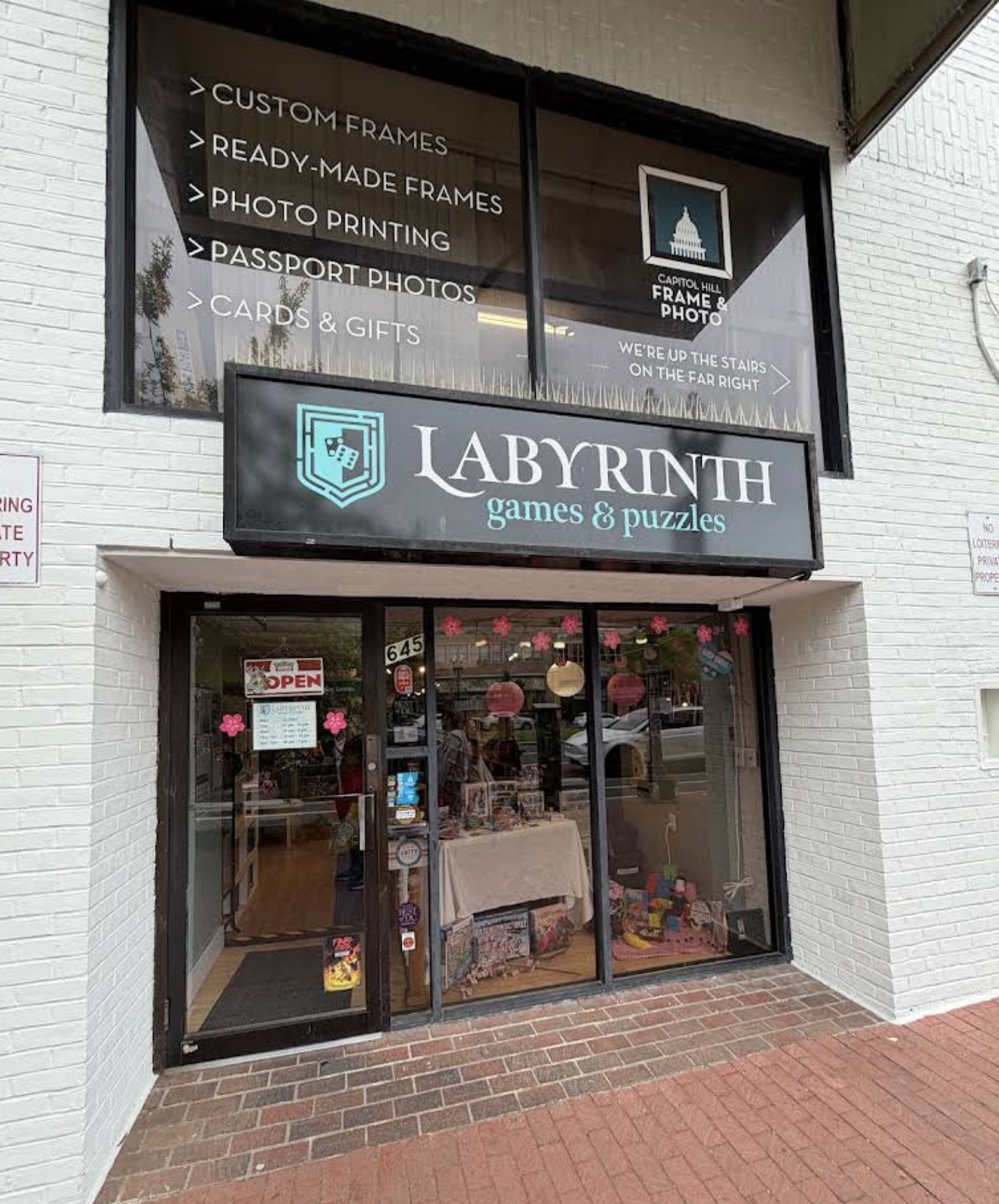
The store is narrow, jammed into the architecture of the city. It focuses on board games, so there are hundreds of different tabletop adventures for every kind of occasion. Somehow it smelled like an old library that’s filled with all the classics. As I made my way to the back, I saw 10 tables filled with around 20 to 30 players.
“If you’re here for the Pokémon league, you can just sit at any table. It’s pretty freeform so just play whoever you want!” said River, the “professor” of Labyrinth.
The professor title is given to people who run hobby stores with Pokémon after they’ve passed a certification course. They act as the guide for all their players, setting up events and acting as a judge during matches. The professor is there to ensure people feel comfortable, follow the rules, and participate in the Pokémon community, as River described it.
The back of the store had all sorts of people there. A few kids set up a table, constantly calling River over to help them build decks and enforce rules. At the other tables, older Pokémon fans sat and talked about the game. They all bunched up in groups of four, with conversation flowing freely as they all played, sometimes even spilling over into other tables.
Even though it was casual, I was still nervous to actually play. Although I’ve loved the franchise my whole life, I hadn’t ever actually played someone in the TCG. On top of my lack of experience, some of the players there had competed in high-level tournaments and done extremely well. Daniel, a roughly 30-year-old man, came up to me after I awkwardly sat down at a table.
“Is this your first event?,” he kindly asked.
“Yeah, I’m a little nervous to play, honestly. I have this Dragapult/Dusknoir deck, but I’ve never used it, so I’m kinda lost,” I sheepishly replied.
“Oh ok. Yeah, Pult [Dragapult] is a hard deck for beginners. Do you want me to teach you how to use it? We can totally do an open hand and walk through it,” he enthusiastically responded. For context, when a specific set of one to two Pokemon are the central strategy of a deck—in this case it’s the Pokémon Dragapult and Dusknoir—the deck is simply named after the Pokémon. Additionally, “open hand” refers to an educational style of play where each opponent keeps their hands revealed, instead of hidden as you normally would. It would be like playing Uno with someone and telling them when and why to play their +4 cards or change the color in the center.
I quickly responded, “Yes, absolutely! I’d love to get some help.” I laid out my cards, protected with gaudy yellow sleeves, which I had gotten for free at some point, on the table as Daniel did the same. He spent about half an hour simply explaining the purpose each card served and what I needed to do to win. He had years of experience that I lacked. However, our short training session allowed me to understand the game much better. It was clear he wanted me to enjoy Pokémon the same way he did.
“So, what do you do for work?” I asked once we finished up our game in my victory. Of course, the game was basically Daniel beating himself, but I still won nonetheless.
“Ah, I just do boring tech stuff, nothing too crazy,” he said.
“Oh, cool. Why do you play Pokémon? To get away from all that?” I asked.
“Honestly, yeah, I’ve loved Pokémon since I was a kid. I stopped paying attention in middle school, but once I got to college, I got back into it. It was the only break I had from work and stress. It’s just so nostalgic. It’s nice to remember when I didn’t have to do adult stuff. And it’s just kinda lonely when you move to a city like this by yourself, you know?” he said.
Daniel wasn’t the only person at Labyrinth I found who carried the same feeling of escapism. Labyrinth is the only hobby store in the D.C. limits that has Pokémon, which leads to many government and corporate workers flocking to this store during their free time.
River explained to me that D.C. has strange rules that require shops that want to sell any second-hand TCG card, regardless of price, under “pawn activities”. This requires hobby stores to get special permission for each franchise they wish to sell from the D.C. City Council. These permissions are granted as a part of the D.C. city budget, which must get approved by the city council and U.S. Congress. This turns most hobby stores off from getting approval and, therefore, Pokémon in general. Even though Labyrinth doesn’t have these permissions, they’re still willing to host Pokémon events and provide that space for the community.
Labyrinth plays a unique role for the DMV Pokémon community. It’s the only location for those in the district to meet people through Pokémon. Every other store sits outside the D.C. border, adding 30-40 minutes of travel time–if the Metro can reach it in the first place. This strange set of circumstances means it’s common to play against the same people that brush shoulders with senators, CIA agents, and corporate officials. However, Labyrinth provides a place for these people to be free of the secrets and stress.
“It’s really nice to have a community like this. I mean, a lot of Pokémon players in the DMV come from all over the country for these serious jobs, so being able to meet other people with the same interests is awesome. It really lets us get out of it and find a community,” Daniel said before we parted ways.
Before I left, I asked River one last question: “Where do all the serious players go? Someone told me the DMV is one of the toughest regions in the U.S.,“Player 1 Services. That’s like, the spot for Pokémon in the DMV. You should totally check them out, great store,” they quickly responded. So, just as I did with Labyrinth, I looked at the calendar for Player 1 Services and signed up for the first event I could. but they don’t really play [at Labyrinth] too often.”
The next Saturday rolled around and I got on the Metro, where I endured the 45-minute ride to Player 1. Before you walk up the stairs to their storefront, Pokémon merchandise is visible in the windows, inviting fans in. As I entered the store, I could hear music from the Pokémon games playing as fans enjoyed the space.
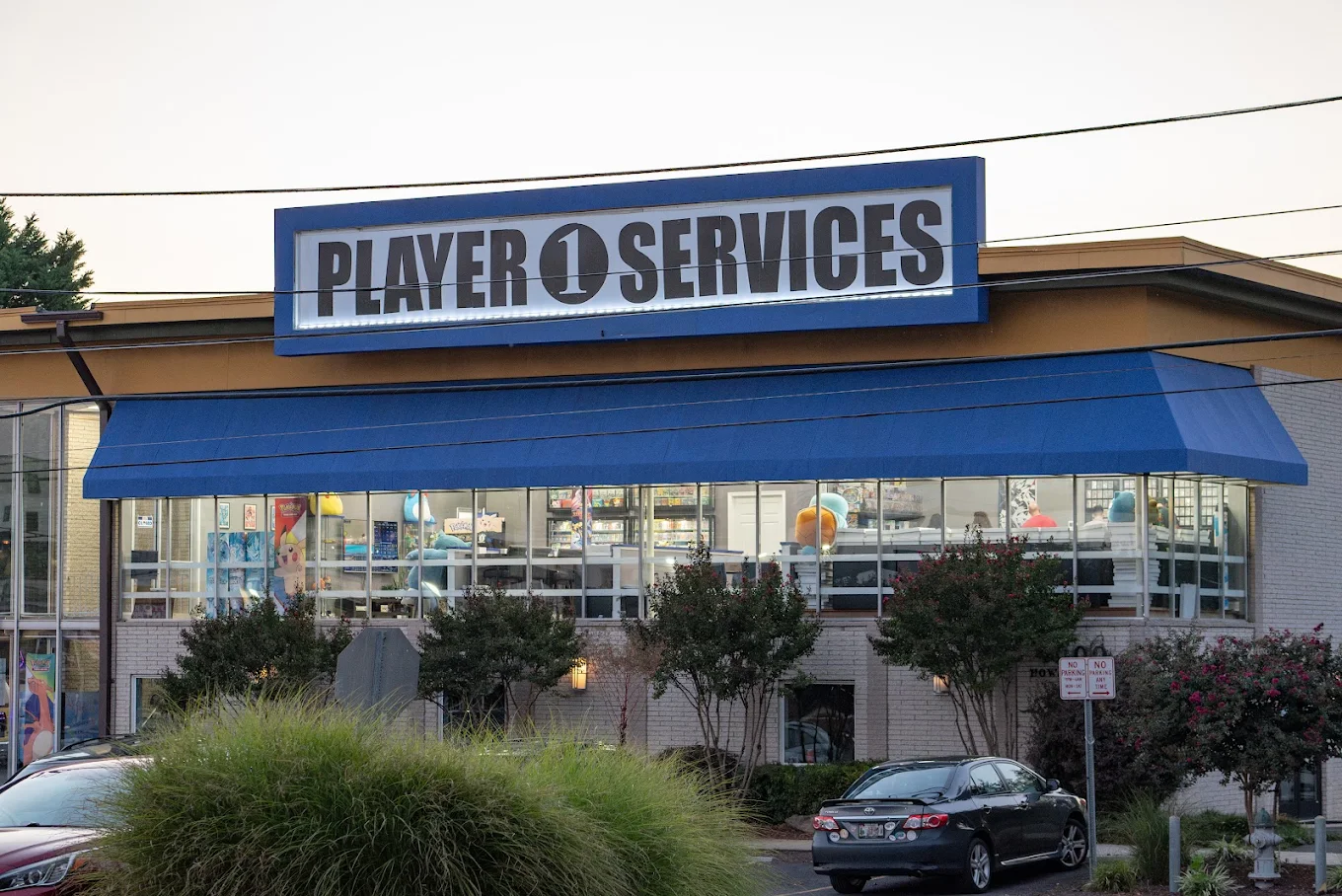
Player 1 is different from Pure Panic and Labyrinth. It’s a space purely dedicated to Pokémon. There are TVs for watching the animated show or various professional matches, and the walls are covered in some of the most expensive cards and packs you can buy. Memorabilia like plushes, posters, and other fan made art fill the spaces cards don’t. Towards the back, there’s filing cabinets with tens of thousands of Pokémon cards. I learned later that Player 1 owns one of the largest collections of cards in the world, with millions spread out across multiple storage locations.
A majority of the floor space is the 15 picnic tables players actually duke it out. This is where I would be playing in my first official tournament.
After I had told the employees my name, I was ushered towards the back of the store and told I would be playing three matches against different players. Luckily, the tournament I signed up for was purely casual, so I wouldn’t have to play against local players like Justin Newdorf, a trainer who placed second in the 2025 Pokémon World Championship at just 16. Unfortunately for me even the casual players there are incredible at the Pokémon TCG.
I was still ready to take them on. Although I had practically no experience, I thought I could squeeze a win or two out. Daniel had taught me the ins and outs of my deck, so I had a good bit of confidence going in. However, the first match began and I lost within the first 10 minutes. Typically, matches take upwards of 30 minutes, so it’s easy for me to say I got greatly outclassed. Honestly, I couldn’t tell you why. The match moved so quickly, and I was so inexperienced, that it was over before I knew what was going on. Even though I’d played a few matches at Labyrinth, this environment was crushing all confidence I had built up.
Every match turned out almost exactly the same way. But I started to understand why I was losing. Sadly, there simply wasn’t anything I could do to stop it. Like a hurricane on the Florida coast, all I could do was prepare for the inevitable or hope I got lucky. Each player was friendly and understanding. I played against a variety of people: an adult in his mid-20s, a teenager not much younger than myself, and a 10-year-old who understood the game better than any of the players I just mentioned. There was constant encouragement as players gave me advice on my thought process and decision-making. Although they still wanted to win, each player also wanted to make sure I got better.
“Sometimes this game is like life, you just get unlucky and that’s how it goes. You should definitely come back, you’ll do way better for sure,” something my first opponent told me shortly after he beat me.
The fast-paced environment made it hard to talk to any players. It quickly sucks you up, forcing you to put all of your attention into the game you’re playing. Everyone there wanted to get better. Even if the tournament was catered towards more inexperienced trainers, it didn’t stop anyone from doing whatever they could to win.
“You wanna stay fresh? You wanna practice? Well then you’re probably still going to be playing local… Being able to share that skill and experience is important to any community,” is what the owner of Player 1, Ben, said when I asked why these events are at such a high skill level. Even if someone like me loses three straight matches, just having that space of encouragement provides a community for them. You can still come to Player 1 and lose all of your matches while having a good time, surrounded by players who want to get better just like you. People who share the same passion and values you do.
At the end of the tournament, I got back onto the same bus I had rode a few hours earlier. Even though I had horrible results, I found myself looking forward to the next opportunity to play Pokémon. It was incredible to finally find a place with people who grew up with this franchise just like I did. No one there judged me for my favorite Pokémon Whimsicott, an adorable anthropomorphic cotton plant sheep hybrid, which clearly doesn’t match my manly, dark aesthetic.
I was able to forget about the stress of school and upcoming final projects. My mind was taken up by Pokémon the same way it was when I was younger trading cards on the playground or curled into bed playing Pokémon Omega Ruby. At that moment, I realized what it meant to escape to this world of Pokémon as an adult. Every person who walked into these stores wanted to get better, play the game they love, and find someone else who loved the same fictional creatures they do. The Pokémon community in D.C. provides a unique place for escaping momentarily. Instead of worrying about deadlines, you can bring your partner, kids, or friends to a place like Player 1 and worry about how to beat the person you love in a children’s card game.
“Why do you play? What’s your goal now that you’ve basically reached the top?” I asked the nervous 17 year old, Justin Newdorf.
“I love it here… I just want to have fun. I love the game, it’s my passion. I’ve met so many cool people, [in the DMV] and in America,” he replied, clearly eager to play more Pokémon with everyone else.